
Artificial Vines and Wall Mats: Fresh Wall Décor Ideas

Artificial Vines and Wall Mats: Fresh Wall Décor Ideas
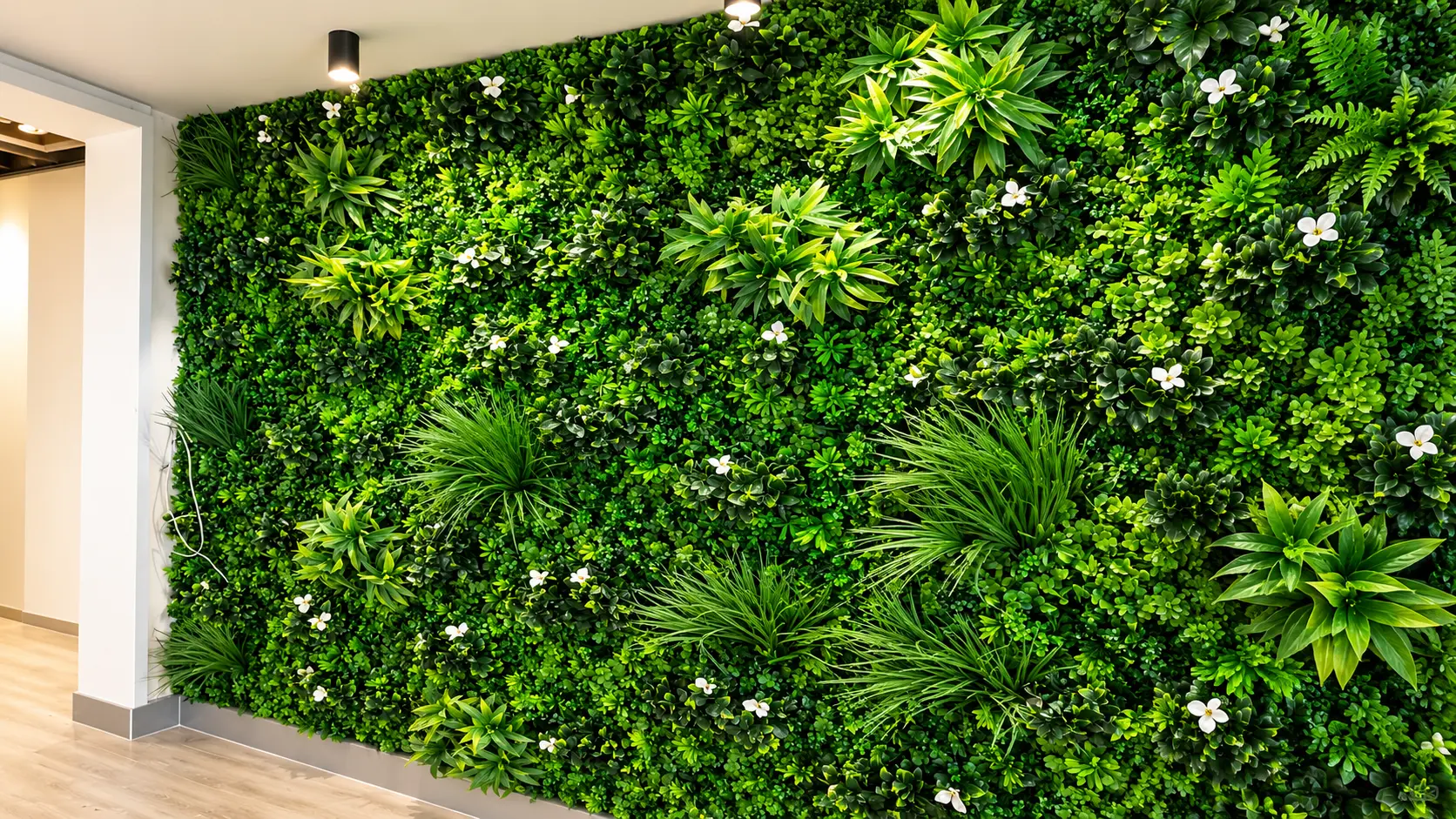
Plain walls can make an interior feel unfinished, even when the furniture and accessories are carefully selected. Fortunately, Artificial Vines and Wall Mats offer a creative way to introduce greenery, texture, and visual interest into ordinary spaces.
These decorative products allow you to create attractive green features without growing living plants. Artificial vines provide a trailing effect, while wall mats create fuller coverage across selected surfaces. Together, they can transform simple walls into striking decorative elements.
Whether you are updating a living room, designing an office, or improving a commercial space, artificial greenery offers several styling possibilities. With proper placement and thoughtful combinations, you can create an attractive environment that complements your existing interior design.
Why Artificial Vines and Wall Mats Are Popular for Wall Decoration
Greenery adds texture and colour to interior spaces. However, maintaining living plants on vertical surfaces can require additional care, suitable growing conditions, and appropriate installation systems.
Artificial greenery provides a practical alternative for decorative applications. It does not require watering or sunlight for growth, and its appearance remains relatively consistent with basic cleaning.
Furthermore, artificial vines and foliage panels can be installed in different arrangements. You can cover an entire wall, highlight a specific section, or create a smaller decorative feature.
These options make artificial greenery suitable for contemporary homes, hospitality environments, retail stores, and professional workplaces.
1. Create a Green Feature Wall in Your Living Room
The living room is one of the most effective places to introduce a decorative green wall.
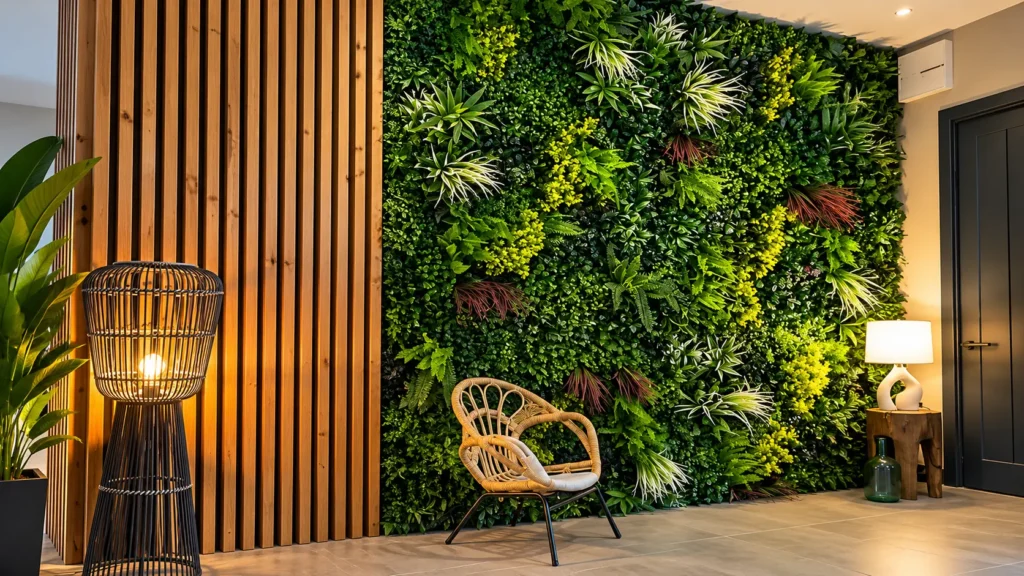
Instead of leaving a large wall empty, consider using artificial foliage mats to create a defined feature behind a seating area. This approach adds texture and creates a visual backdrop for the surrounding furniture.
For a balanced appearance, combine the greenery with neutral sofas, wooden furniture, or understated decorative accessories.
Artificial vines can also be positioned along the edges of the installation. Their trailing shapes introduce movement and help soften the overall design.
However, avoid covering every available surface without a clear plan. A well-defined feature wall often looks more intentional than greenery scattered throughout the room.
2. Use Artificial Vines and Wall Mats for Office Interiors
Office decoration should balance professional presentation with visual appeal.
A carefully designed green wall can introduce colour into reception areas, meeting rooms, workspaces, and employee lounges. It can also create an attractive background for video calls, branded photography, and corporate content.
For instance, a wall behind a reception desk can feature artificial greenery with the company logo positioned prominently in front. This creates a distinctive visual element without requiring extensive decorative furniture.
Artificial vines can also frame shelving, wall signs, and selected architectural features.
When designing an office installation, keep the layout consistent with the company’s branding. Neutral finishes, suitable lighting, and clean edges help maintain a professional appearance.
3. Decorate Bedrooms with Artificial Hanging Vines
Bedrooms can benefit from subtle greenery when it complements the room’s overall design.
Artificial hanging vines can be arranged around decorative shelving, selected wall frames, or suitable ceiling-mounted features. Their trailing appearance creates a softer decorative effect without occupying valuable floor space.
For a minimalist bedroom, use a small number of vines against a neutral wall. Alternatively, combine different foliage textures for a fuller arrangement.
You can also introduce warm lighting to highlight the leaves and create interesting shadows.
Nevertheless, keep vines away from hot light fixtures and ensure all hanging materials are securely installed. The goal is an attractive feature, not an improvised jungle waiting to fall on the bed.
4. Transform Commercial Spaces with Artificial Greenery
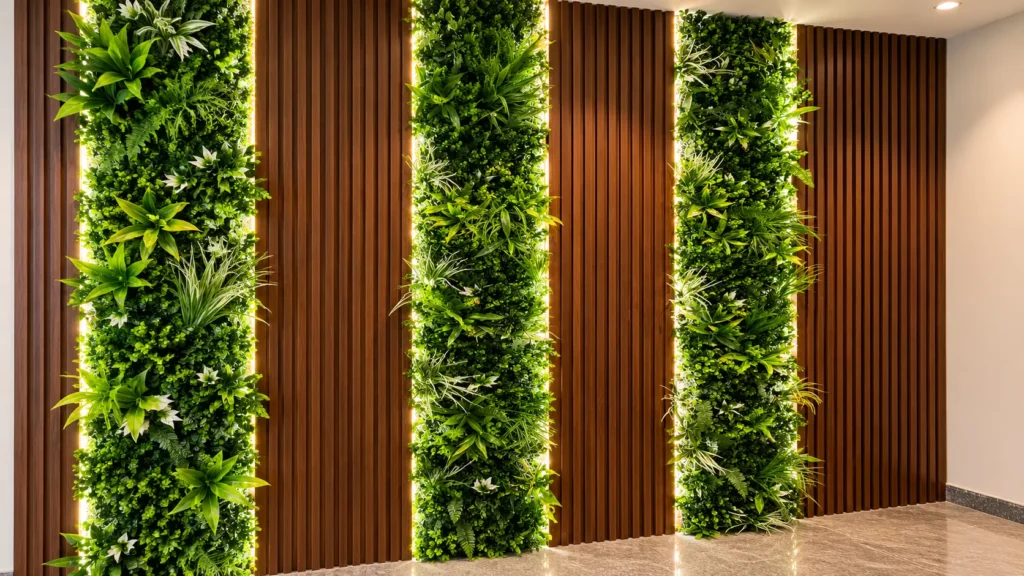
Restaurants, hotels, salons, boutiques, and event venues can use artificial greenery to create memorable interiors.
A green wall behind a restaurant seating area can provide an attractive backdrop for photographs. Similarly, a salon can use artificial foliage behind its reception counter to establish a distinctive visual identity.
Retail stores can also incorporate greenery into display areas. This helps distinguish selected sections and provides a decorative background for merchandise.Order
For hotels and hospitality businesses, artificial foliage can be used in entrance areas, lounges, waiting spaces, and selected corridors.
Because artificial plants do not need watering, they can be useful in locations where routine plant care would be difficult. However, installations still require occasional cleaning and secure mounting.
5. Combine Artificial Wall Mats with Hanging Vines
One of the most effective ways to design a green wall is to combine different foliage forms.
Wall mats provide a dense foundation, while individual vines create a cascading effect. This combination can make an installation appear fuller and more visually interesting than a flat arrangement of identical leaves.
Follow these practical design principles:
- Begin with a suitable wall mat as the main background.
- Add hanging vines around selected edges or upper sections.
- Introduce foliage with different leaf shapes and shades of green.
- Fill visible gaps without making the arrangement excessively crowded.
- Use lighting to highlight the texture and depth of the installation.
Different foliage textures can help create a more natural-looking result. This layered approach is also recommended in artificial living-wall installation guides. (Blooming Artificial)
6. Choose the Right Wall for Your Installation
Before purchasing decorative greenery, examine the wall you intend to decorate.
Consider the wall’s dimensions, existing furniture, available lighting, and intended purpose. These factors will help determine whether a small accent arrangement or a larger installation is more appropriate.
For example, a narrow hallway may benefit from a compact decorative feature. In contrast, a large reception area may accommodate a more extensive foliage installation.
Also, consider the wall’s surface and the weight of the materials. Concrete, brick, plasterboard, and tiled surfaces may require different mounting methods.
For larger installations, a suitable support frame can make installation easier and help distribute the load. Always select fixings appropriate for the wall material and the weight of the finished feature.
7. Improve Your Green Wall with Lighting and Accessories
Lighting can make artificial greenery more visually appealing.
Directional spotlights can highlight the leaves and create shadows that give the installation greater depth. Warm lighting may complement wood and neutral finishes, while brighter lighting can suit modern commercial interiors.
You can also combine artificial greenery with carefully selected accessories.
Consider incorporating:
- Decorative wall lettering
- Brand logos
- Mirrors
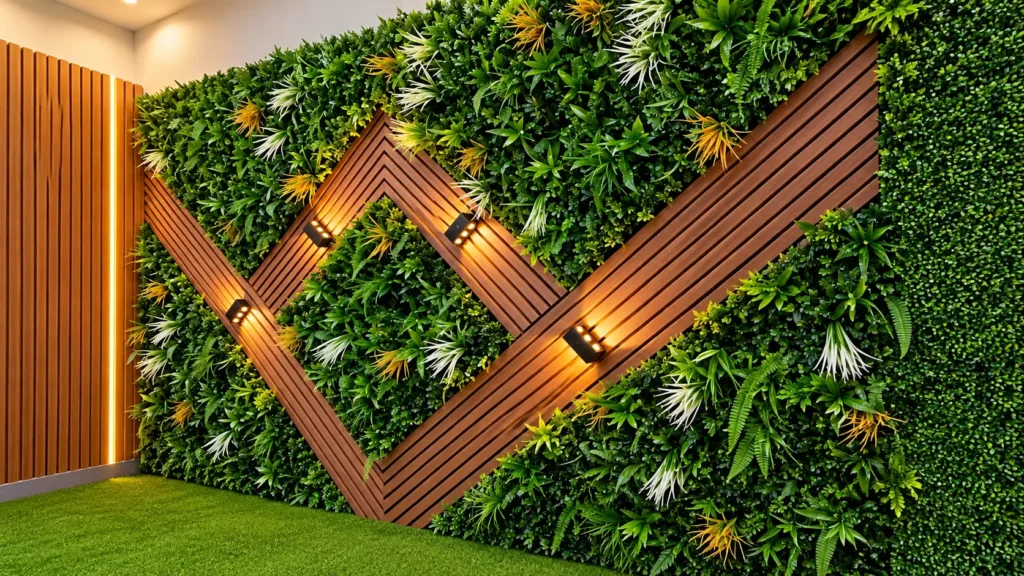
- Wooden slats
- Metal accents
- Suitable wall-mounted lighting
However, keep accessories proportionate to the installation. Too many decorative elements can compete with the greenery and weaken the overall design.
8. Maintain Your Artificial Green Wall
Although artificial greenery requires less routine care than living plants, it still needs occasional maintenance.
Dust can collect between leaves, especially in busy commercial environments. Use a soft brush, duster, or suitable cleaning method recommended by the manufacturer.
Additionally, inspect the mounting system periodically. Check that panels, hooks, frames, and other fixings remain secure.
For outdoor installations, choose products specifically rated for outdoor exposure. Direct sunlight, rain, and changing weather conditions can affect artificial foliage that is not designed for those environments.
Regular cleaning and appropriate installation help preserve the appearance of your decorative wall.
Why Artificial Wall Greenery Is Worth Considering
Artificial greenery offers flexibility for decorating different types of walls. It can introduce colour, soften hard surfaces, and create a distinctive feature without the growing requirements of living plants.
Artificial Vines and Wall Mats are particularly useful when you want to combine full foliage coverage with a cascading decorative effect.
From residential interiors to offices, restaurants, hotels, and retail spaces, these products provide several ways to personalise an environment.
The best results come from choosing suitable foliage, planning the layout carefully, and using appropriate mounting methods. With these details in place, an ordinary wall can become a purposeful and attractive part of your interior design.
